Scroll the cabin listings around Asheville on any weeknight and a pattern shows up fast. The living room, shot wide at noon with every lamp on. A bedroom. Another bedroom. A bathroom, flash bouncing off the mirror. Somewhere around photo fourteen, a porch with a view nobody waited around for. The rooms are all there. The stay is missing.
I photograph cabins, boutique suites, lake houses, and mountain retreats across Western North Carolina, the north Georgia mountains, upstate South Carolina, and east Tennessee. I came to hospitality photography from landscape work, which means I show up early, leave late, and pay more attention to the ridge behind the house than most property photographers do. This is what great hospitality photography looks like from behind the camera, how it turns into bookings, and what to ask before you hire someone to make it.

Documentation and storytelling: why most vacation rental photos stop halfway
Every property gallery has two jobs. The first is documentation. How many beds, what the kitchen looks like, whether the shower has a tub. Guests need that, and a listing that skips it loses their trust.
The second job is storytelling. What the morning feels like on the porch, how the light comes through the trees at four o'clock, where you'd set your coffee down. Most galleries I see do the first job well and never get to the second.
That gap makes sense. Real estate photography trained a generation of photographers (and owners) to shoot rooms the way an appraiser sees them: wide, bright, and even. That works for selling a house. A vacation rental sells a few days out of someone's year, and the guest scrolling at 11 p.m. has one question on their mind. Can I picture myself here?
Good hospitality photography answers both. I shoot every room straight and clean for the people comparing bed counts. Then I spend at least as much time on the frames that answer the second question.
What great property photos have in common
Once the documentation is covered, four things separate a gallery that books from one that blends in.
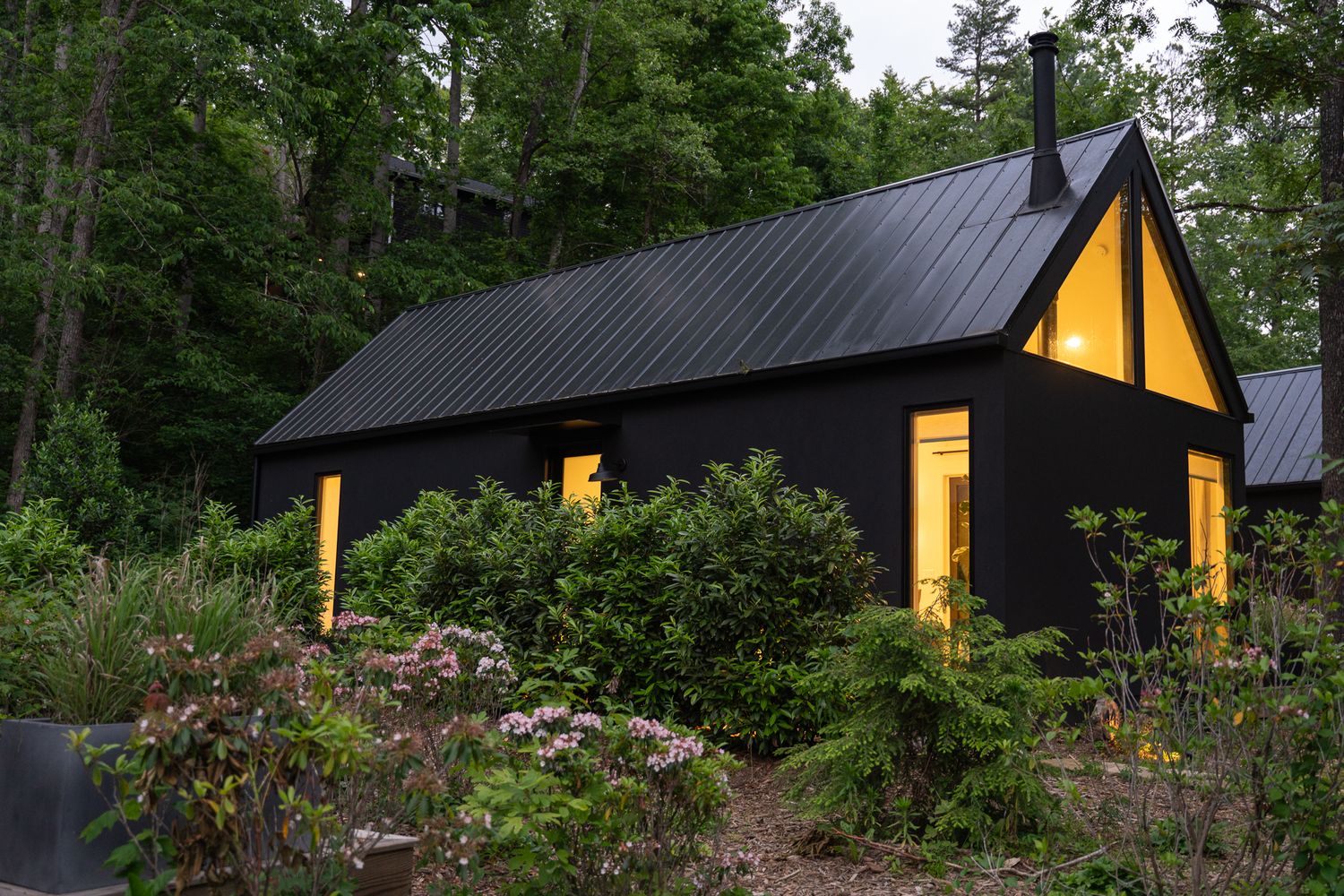
Light. Time of day does more for a property than any lens. Interiors look their best in soft daylight with a few lamps on for warmth. Exteriors come alive in the first hour after sunrise and the last hour before sunset. In the mountains, that window moves fast, especially in a hollow where the ridge swallows the evening light by five o'clock in November. I plan every shoot around where the sun actually falls on the property, so a cabin day often starts at 7 a.m. and ends at dusk.
Negative space. A chair, a window, and a quiet wall can sell a stay better than a frame crowded with every throw pillow in the house. Space reads as calm, and calm is what a mountain getaway promises.
Lived-in detail. A mug on the porch rail. Firewood stacked by the stove. A trail map on the counter. These small, true details tell a guest someone thought about their arrival. My rule: if it's in the photo, the guest should find it there. Staging a hot tub with champagne the property doesn't provide is a three-star review waiting to happen.
The landscape. This is where the landscape background earns its keep. A cabin twenty minutes from downtown Asheville is selling the woods as much as the walls. So I photograph the creek, the long-range view from the deck, fog lifting off the ridge at sunrise, and the trail that starts at the property line. At Firelight at Shope Creek, eight cabins on 22 wooded acres, the natural location is half the reason guests book, and the photos treat it that way.

Common mistakes in vacation rental photography
Most weak listings fail in one of five ways, and every one of them is fixable.
- Over-staging. Bowls of green apples, towels folded into swans, a dining table set for a dinner party nobody has ever thrown there. Over-staged rooms look like a catalog, and guests notice when the real room doesn't match. Remove a third of what's on every surface, then look again.
- The wrong time of day. Midday sun flattens a mountain view into haze and blows out every window. If the view photo looks gray and washed out, it was almost certainly shot at noon. Reshoot it at sunrise.
- Ignoring the setting. A gallery that shows the inside of a cabin and nothing of the forest around it leaves out the reason someone drove two hours to get there.
- Photos that no longer match the property. A new deck, a renovated kitchen, a fence that wasn't there two years ago. I talked with an owner this fall whose cabin had close to a hundred five-star reviews and a gallery that no longer showed what guests would find. Outdated photos undersell the work you've put into the place.
- Over-processing. Heavy HDR, cartoon skies, and lawns pushed to neon green set expectations the property can't meet. I'll remove a stray extension cord. I won't swap in a sunset that wasn't there.
How better photos turn into bookings
I can't promise a number, and I'd be wary of anyone who does. Bookings depend on rate, reviews, season, and a dozen other things a camera can't touch. What I can describe is where photos do the work, based on the properties I shoot and market.
The search thumbnail. On Airbnb and VRBO, a guest sees one photo in the search results before they click anything. That image competes with every other cabin in the county on a screen the size of a playing card. It has to read small: one clear subject, strong light, no clutter.
The first five images. On the listing page, the opening handful of photos carries most of the decision. I sequence galleries so those frames sell the stay (the view, the hero room, the porch, one good detail) and the documentation follows.
Your own website and ads. Owners trying to move bookings away from the 15 to 18 percent commissions on Airbnb, Booking.com, and Expedia need a direct booking site and paid ads, and both run on images. Meta ads burn through photos quickly. For River Row Suites, a boutique property in Asheville's River Arts District, I shoot seasonally so fall and winter campaigns run on fall and winter pictures.
Social media. One shoot that includes vertical crops and a few lifestyle frames can keep a property's Instagram stocked for months.
Reviews. Accurate photos protect your rating. A guest who finds what the pictures promised writes a better review than one who was oversold, and reviews feed search ranking on every platform.


How to choose a hospitality photographer: questions worth asking
A portfolio shows you someone's best ten frames. These questions show you how they work.
- Can I see a full property gallery? The highlight reel tells you about their taste. A complete delivery tells you whether they cover the bathrooms as carefully as the view.
- When will you shoot the exterior? A good answer names a time based on which way the property faces and where the view is.
- How do you handle staging, and what do you need from me? You want a clear prep list and someone who will move furniture with care, without bringing in props your guests will never see.
- What does the license cover? Ask whether your property manager can use the images, whether they can run in paid ads, and what happens if you sell. My standard license is non-exclusive, covers you and your managers for as long as you own or operate the property, and includes ads.
- Do you deliver vertical crops? If you plan to post on Instagram or run reels, the photographer should be framing for 4:5 and 9:16 on the day. A horizontal frame cropped down afterward loses the edges that made it work.
- Have you photographed properties like mine? A lake house on Lake Chatuge, a hike-in campground in north Georgia, and a suite in the River Arts District each ask for something different.
- Do you know how the images will be used? This is the one I care about most, because I'm a content marketer as well as a photographer. Someone who knows where the pictures will run (an Airbnb thumbnail, a Meta ad, a square Instagram grid) shoots for those placements while the light is still good.
Hospitality photography FAQ
Q: How much does hospitality photography cost? A: The cost of a hospitality shoot depends on three things: the number of bedrooms and common spaces, whether you want lifestyle images with people in them, and how the images will be licensed (listings and website only, or paid ads and print as well). I quote each property individually after a short call, and the quote includes the license, so there are no surprise usage fees later.
Q: How long does a vacation rental photo shoot take? A: For a two-bedroom cabin, plan on a half day to a full day on site. I schedule around the light, so the shoot often starts early for morning exteriors and interiors, pauses midday, and finishes at golden hour for the deck, the view, and a twilight exterior with the lights on. Larger properties and multi-cabin sites can take two visits.
Q: How many photos will I get from a property shoot? A: For a two-bedroom cabin, expect 40 to 55 finished images, plus 8 to 10 vertical crops for Instagram and reels. That covers every room for documentation, the exterior and setting, and enough detail and lifestyle frames to keep your listing, website, and social accounts stocked.
Q: What should I do to prepare for a property photo shoot? A: Deep clean first, then declutter: clear the counters, hide cords, remove personal items, and take down guest-instruction signs. Replace burned-out bulbs and match the bulb color throughout. Make the beds with fresh, pressed linens, sweep the deck, and uncover the hot tub. Then set out the details guests actually get, like the firewood, the coffee setup, or the board games. I send a prep checklist ahead of every shoot. [FACT-CHECK: confirm you send one.]
Q: Do you travel outside Asheville for hospitality photography? A: Yes. I photograph properties within 200 miles of Asheville, which covers Western North Carolina, the north Georgia mountains, upstate South Carolina, and east Tennessee. That includes Hendersonville, Black Mountain, Boone, Highlands, and Bryson City in North Carolina; Hiawassee, Lake Chatuge, Blue Ridge, and Helen in Georgia; Greenville, Travelers Rest, and the Lake Jocassee area in South Carolina; and Gatlinburg, Townsend, and Johnson City in Tennessee. Shoots outside the Asheville area carry a travel fee, except around Hiawassee and Lake Chatuge, where there is none.
Worth getting up early for
Back to that listing, and the porch at photo fourteen. Somewhere in these mountains there's a deck that catches the first light over the ridge, and a guest scrolling at 11 p.m. who would book it on the spot if the listing showed it. That's the photo I'm after when the alarm goes off at five.
If your property is ready for pictures that show the stay, tell me about it. I'll tell you when your light is best.