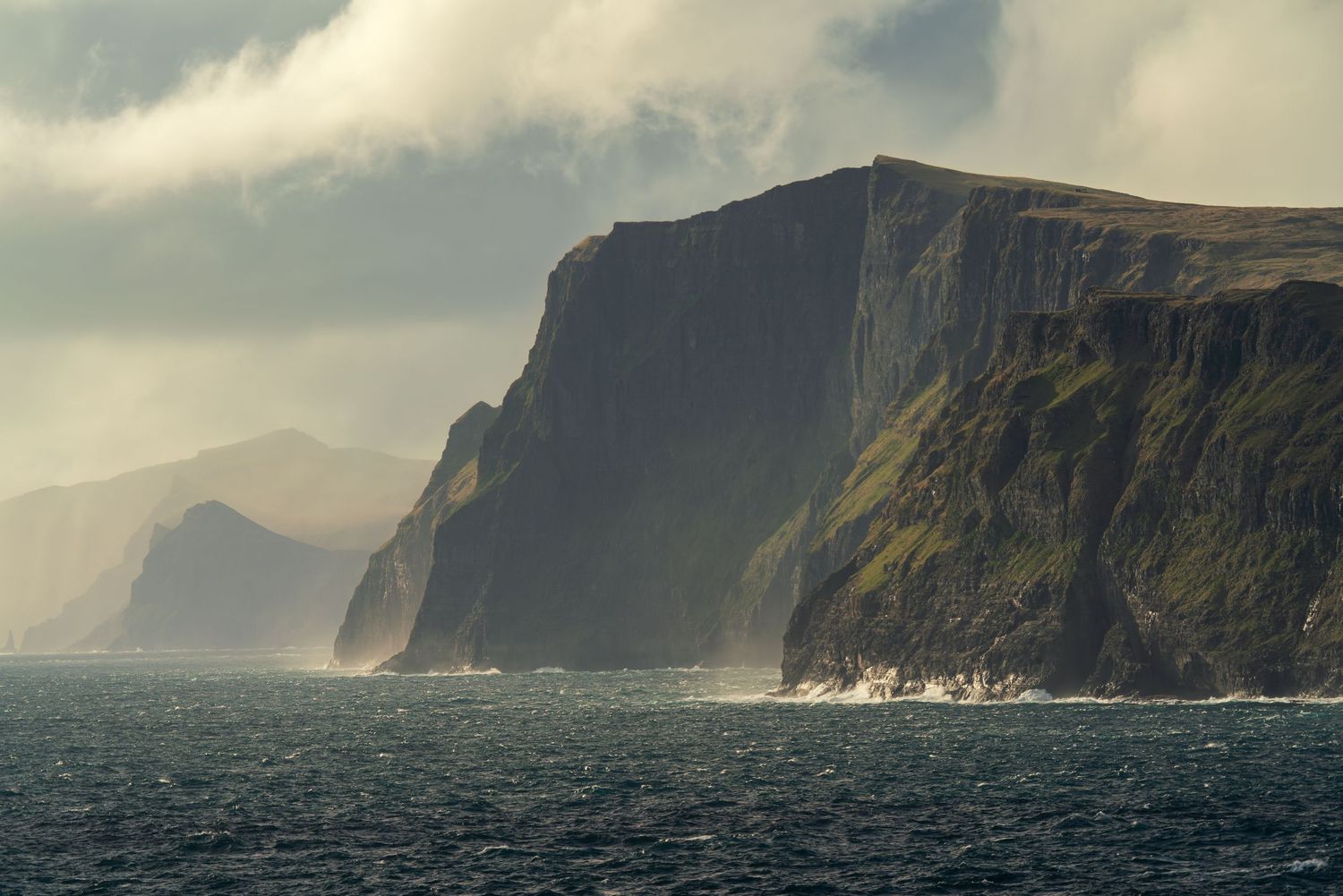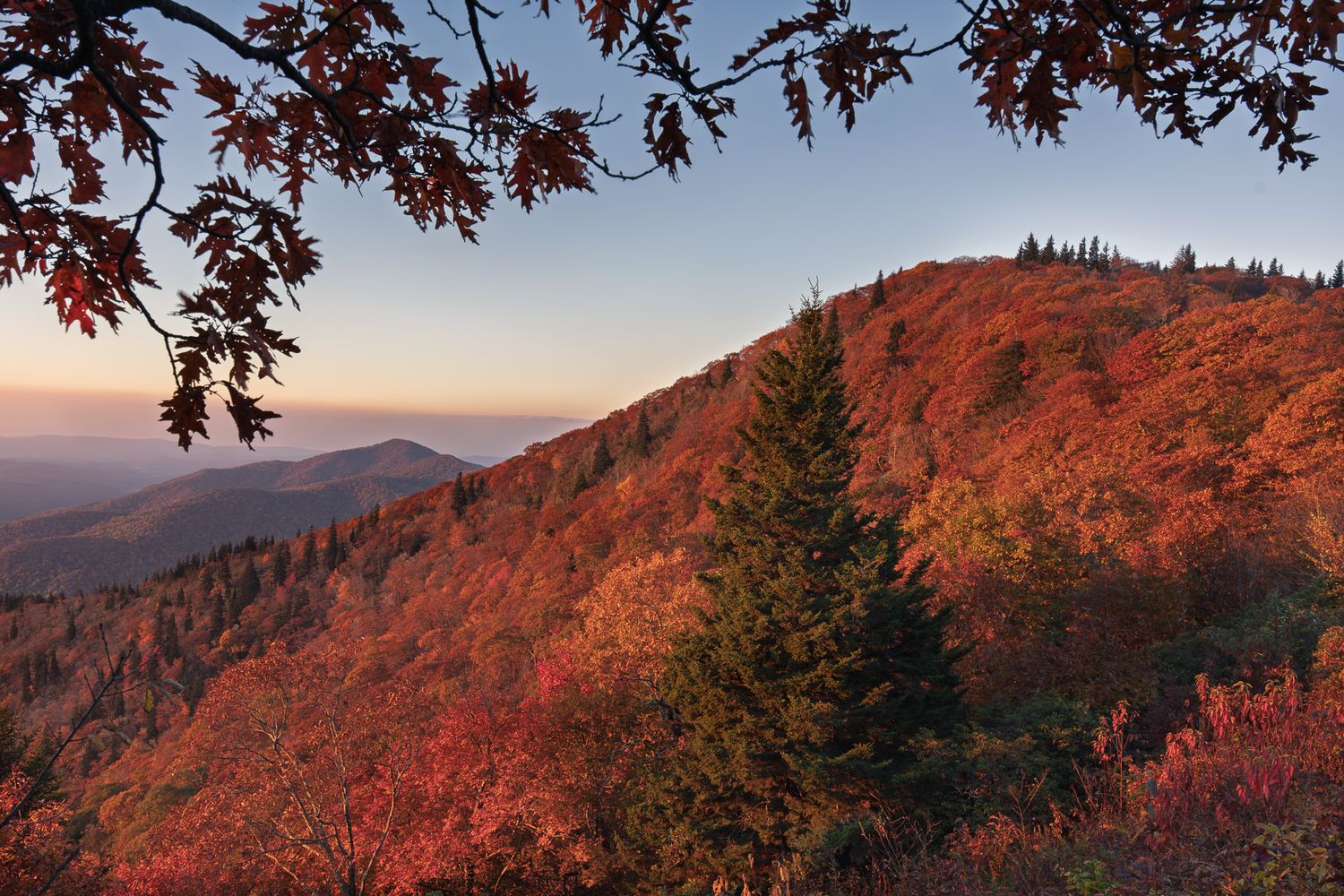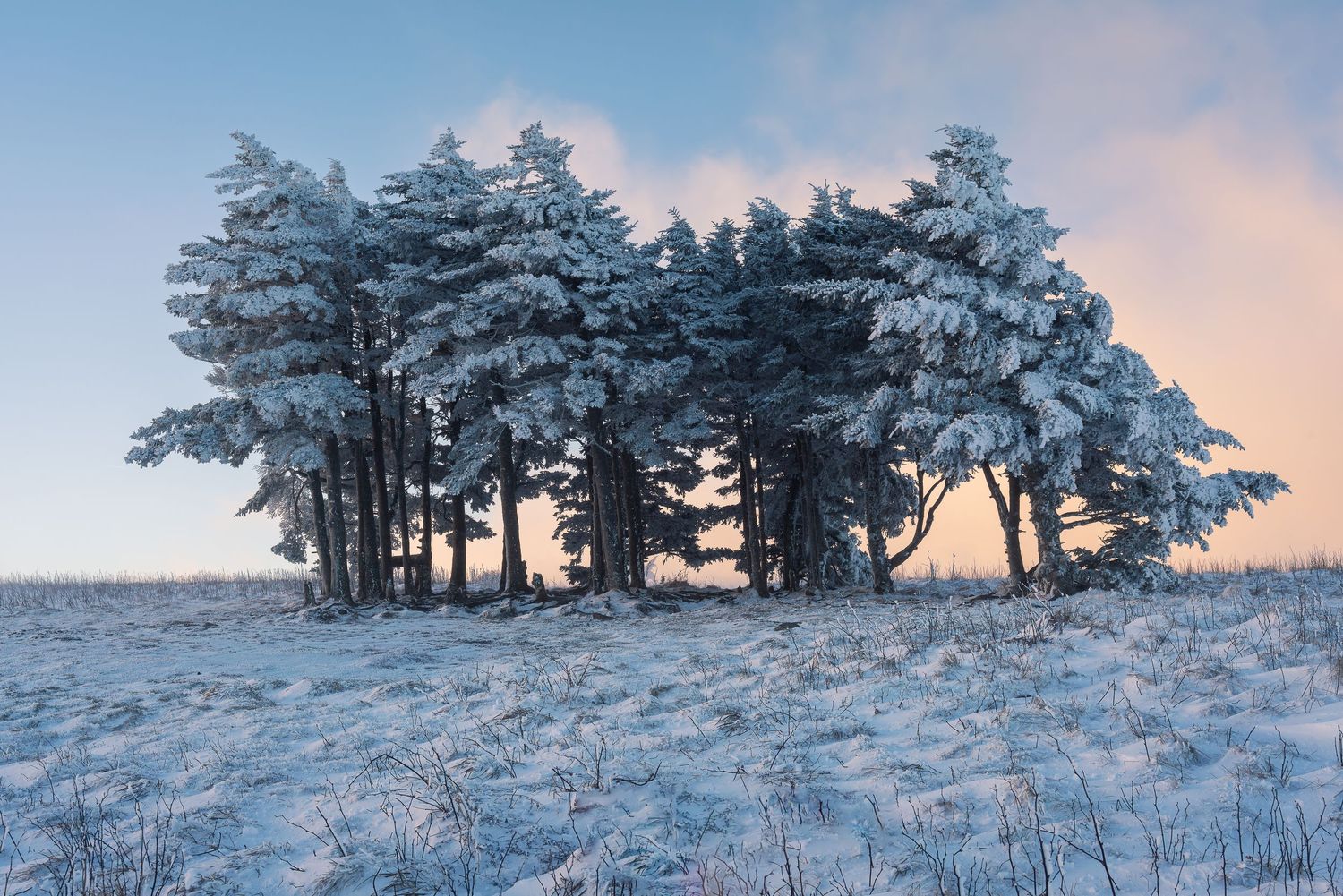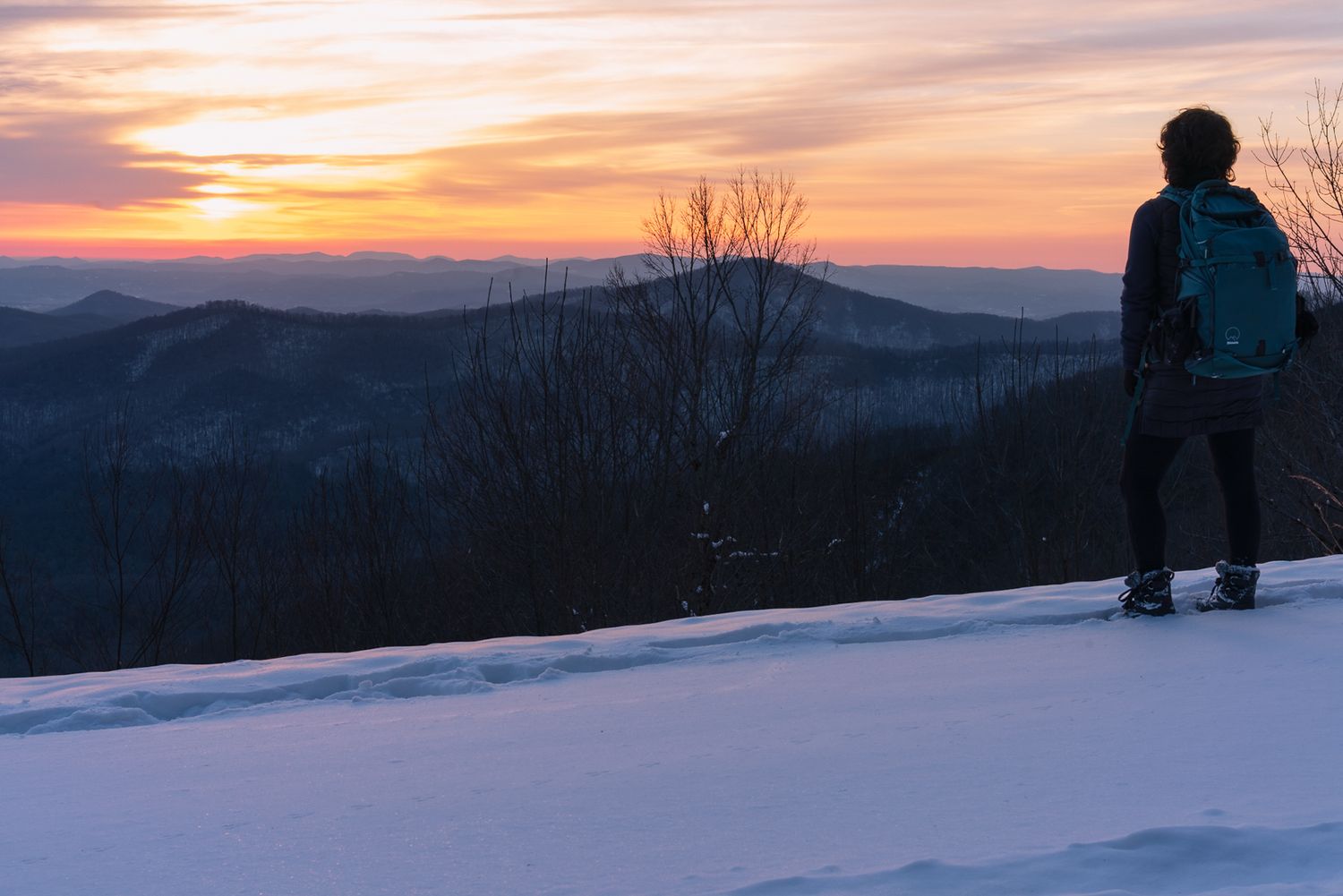
The hoarfrost on Roan Mountain's grass balds at sunrise looks like something out of a fever dream — silver and still and completely otherworldly. The first time I hiked up to catch it in winter light, I was so focused on getting there before golden hour that I didn't stop to think about what the cold would do to my batteries. All of them. Including the backup.
By the time the light peaked, I was stuffing batteries inside my shirt trying to squeeze out a few more frames. I finished that sunrise on my phone.
It was an expensive lesson in a cheap way — no gear was lost, no images were ruined beyond what I'd already missed, but I drove home knowing exactly what I'd do differently. Every item in my bag now is there because I learned, sometimes the hard way, what it does and why it matters. This is that list.
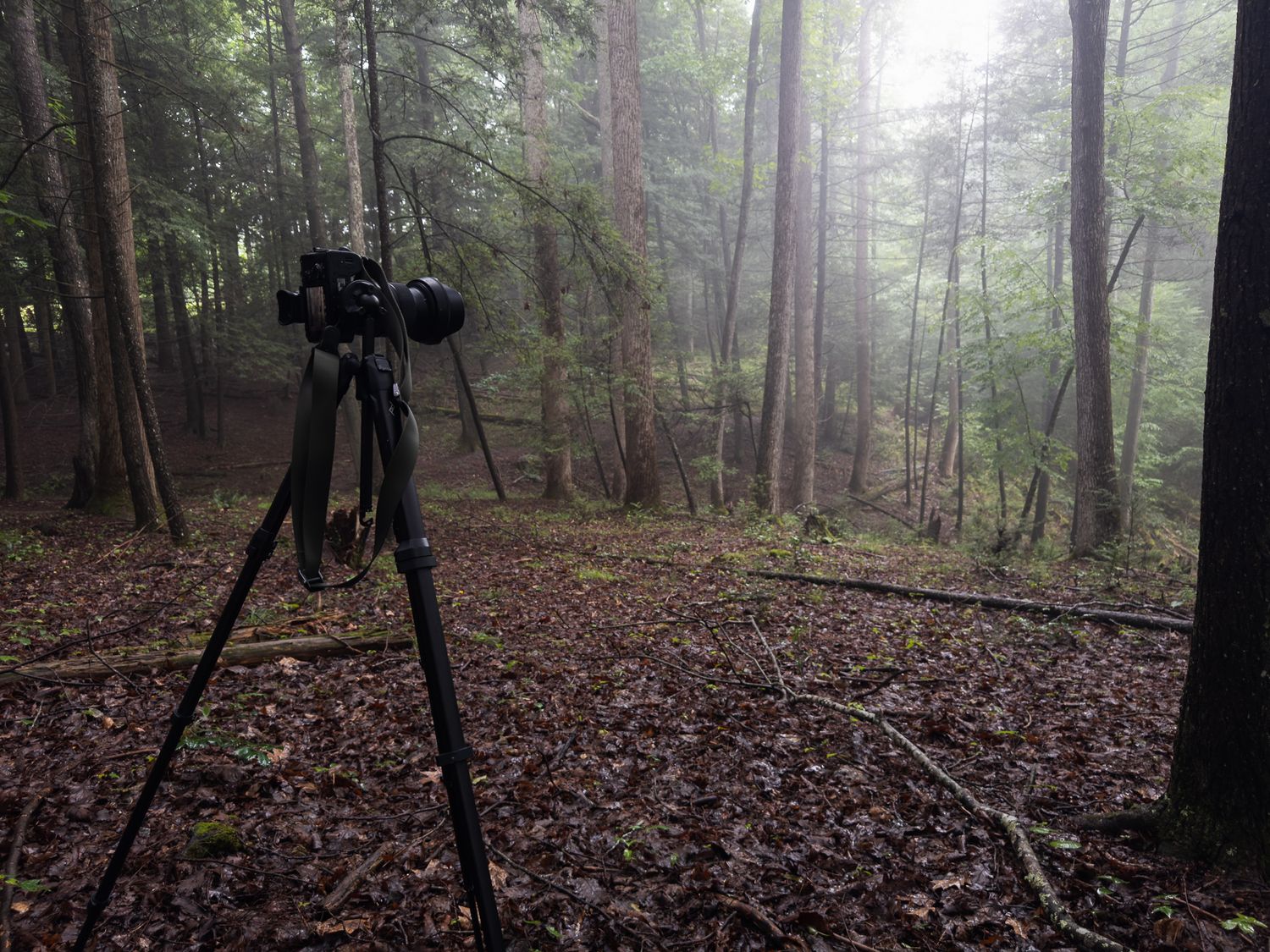
The Camera Body: Sony Alpha A7R III
The Sony A7R III is my primary body, and it's pulled double duty as my commercial and fine art camera since I moved to mirrorless. The 42-megapixel sensor gives me enough resolution to crop aggressively without losing print quality, which matters when you're shooting fast-changing light from a fixed position and the perfect composition reveals itself three seconds after you've already framed the shot. The dynamic range is exceptional in the shadows, which is consistently where I need it — balancing a bright sky against a dark mountain foreground at golden hour is the problem I'm solving more often than any other.
It also goes on every client shoot, which I appreciate. One body, one workflow, no repacking my bag between a hotel shoot and a personal hike the next morning.
The Lens Lineup: Four Lenses, Four Different Jobs
I carry four lenses. Each one has a specific situation where it's the right choice, and none of them overlap enough to cut.
Sigma 24-70mm f/2.8 DG DN Art — This is the workhorse. It stays on the camera the majority of the time because it handles such a wide range of situations: sweeping ridge views, tighter compositions of rock and water, portraits of whoever I've dragged along on a sunrise hike. The f/2.8 aperture means low-light situations don't force a choice between shutter speed and noise. If I had to bring one lens, this is it.
Sigma 14-24mm f/2.8 Art — The wide angle comes out when I want a dramatic foreground to pull the viewer into the scene. Rocky terrain leading toward a ridgeline, a creek filling the bottom third of the frame, the kind of depth that makes you feel like you could step inside the image. It's also my go-to for waterfalls — the wide field of view lets me get close and include the surrounding forest or rock face, rather than isolating the falls as a subject. And for night photography, the f/2.8 aperture and ultra-wide angle are a genuine advantage: more sky in the frame, more light on the sensor, star trails that have room to arc. It exaggerates distance in a way the 24-70 can't replicate, and that quality earns it a spot in the bag on any hike near water or any night I'm planning to stay out past dark.
Tamron 50-400mm f/4-5.6 — For compression and reach. Isolated peaks, layered ridgelines disappearing into haze, a hawk in a dead tree. It's also what I grab when I spot wildlife and need range fast.
Sigma 70mm f/2.8 Art macro — The quiet outlier. Most landscape kits don't include a macro, but I spend real time close to the ground: spring ephemerals, lichen on granite, frost patterns on a leaf. The detail this lens captures at close range is worth the weight. (Note: Sigma no longer makes this in a 70 mm, just a 105mm).
The Tripod: Peak Design
The aluminum Peak Design tripod is not the lightest option out there, and I won't pretend otherwise. What it is, is remarkably compact — it collapses down small enough to slide into the water bottle pocket of either of my bags, which means it actually comes with me instead of sitting by the door because I couldn't figure out where to strap it. That compactness, combined with a build that has held up to real use in real conditions, is what keeps it in the rotation. It travels well too, for the same reason.
The adjustable leg angles let me get low — close to a stream, flush with a field of wildflowers — which is frequently where the more interesting foreground lives.
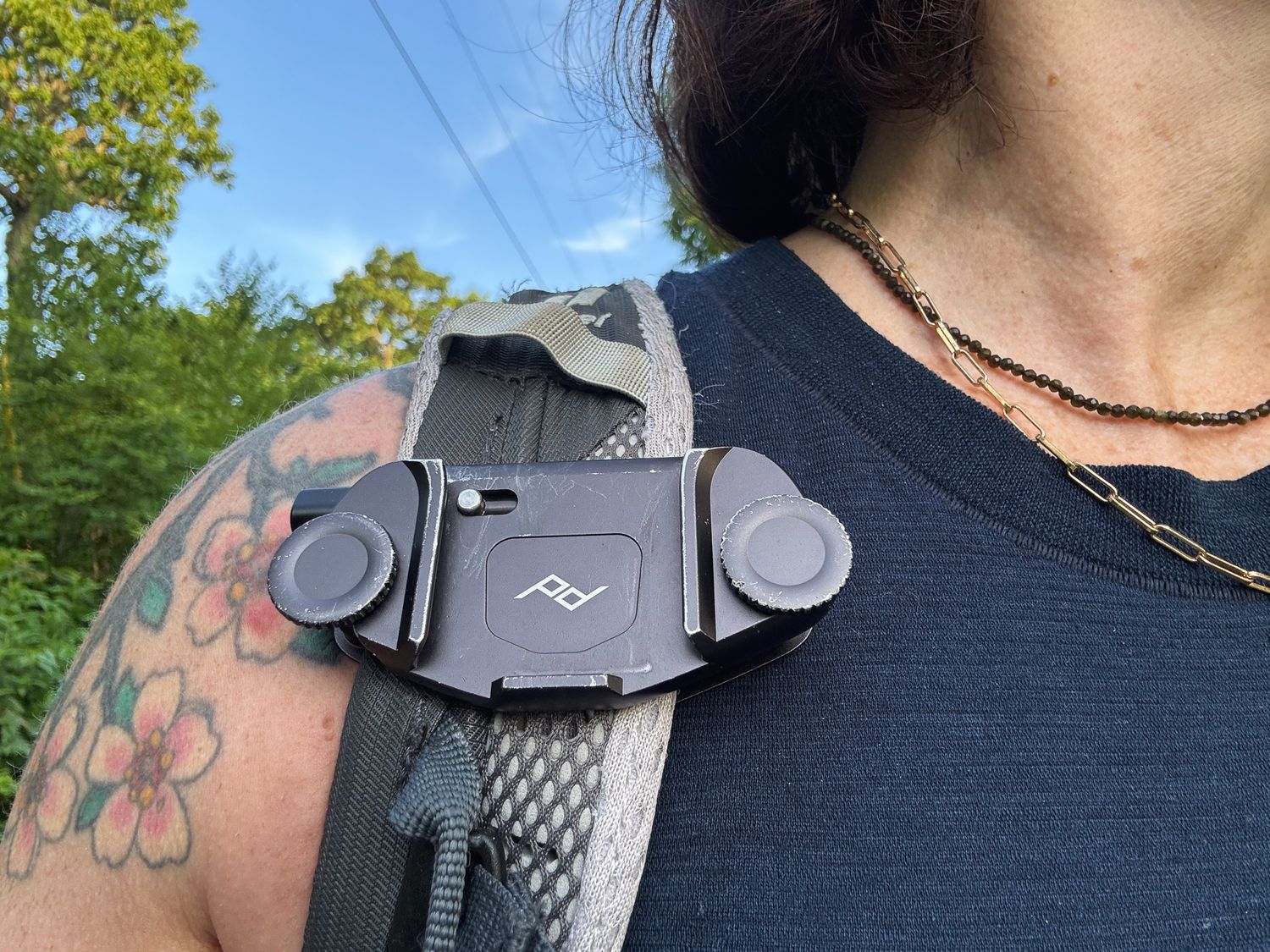
The Peak Design Capture Clip attaches to whichever bag I'm wearing and holds the camera accessible without hanging it around my neck all day. On a four-hour round trip, that distinction matters a great deal.
Filters: Why I Never Leave Without Them
I use URTH Pro 82mm filters on the 24-70mm. I carry a variety of neutral density (ND) and a circular polarizer (CPL). The 24-70mm takes an 82mm thread, and it's the lens most likely to need filtering in the field, so these live in my bag permanently.
The ND filters reduce the light reaching the sensor, allowing for longer exposures in bright conditions. Silky water movement on a sunny afternoon, clouds dragging across a summit — anything where the correct exposure would be too fast to show motion, the ND solves it.
The CPL cuts glare and deepens color contrast, not unlike a good pair of polarizing sunglasses. It's the difference between a flat, reflective water surface and one where you can see the rocks underneath. I reach for it more often than the ND. On a bright day near any water, it's the first filter on the lens.
Both fit into my workflow without slowing me down, which matters on a hike where the light doesn't wait.
Which Bag I Carry (and When)
Two bags, two different situations.
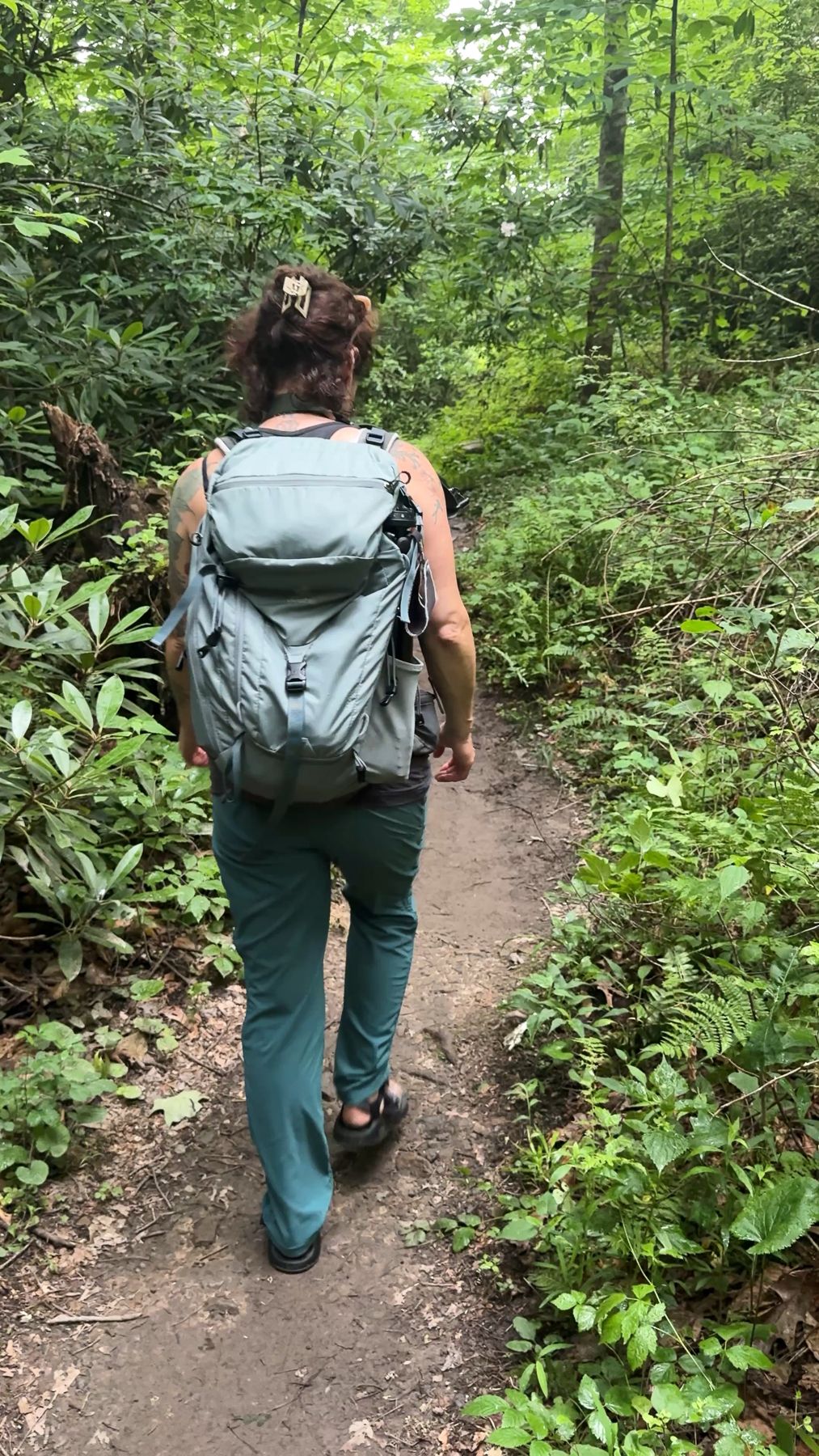
The Deuter Trail 28 is my hiking pack. It's light, ergonomic, and built for distance and terrain. When I'm covering real ground and the priority is moving efficiently through it, the Trail 28 carries the essentials — one or two lens swaps, filters, snacks, water — without weighing me down. I don't try to bring the whole kit on a serious hike.
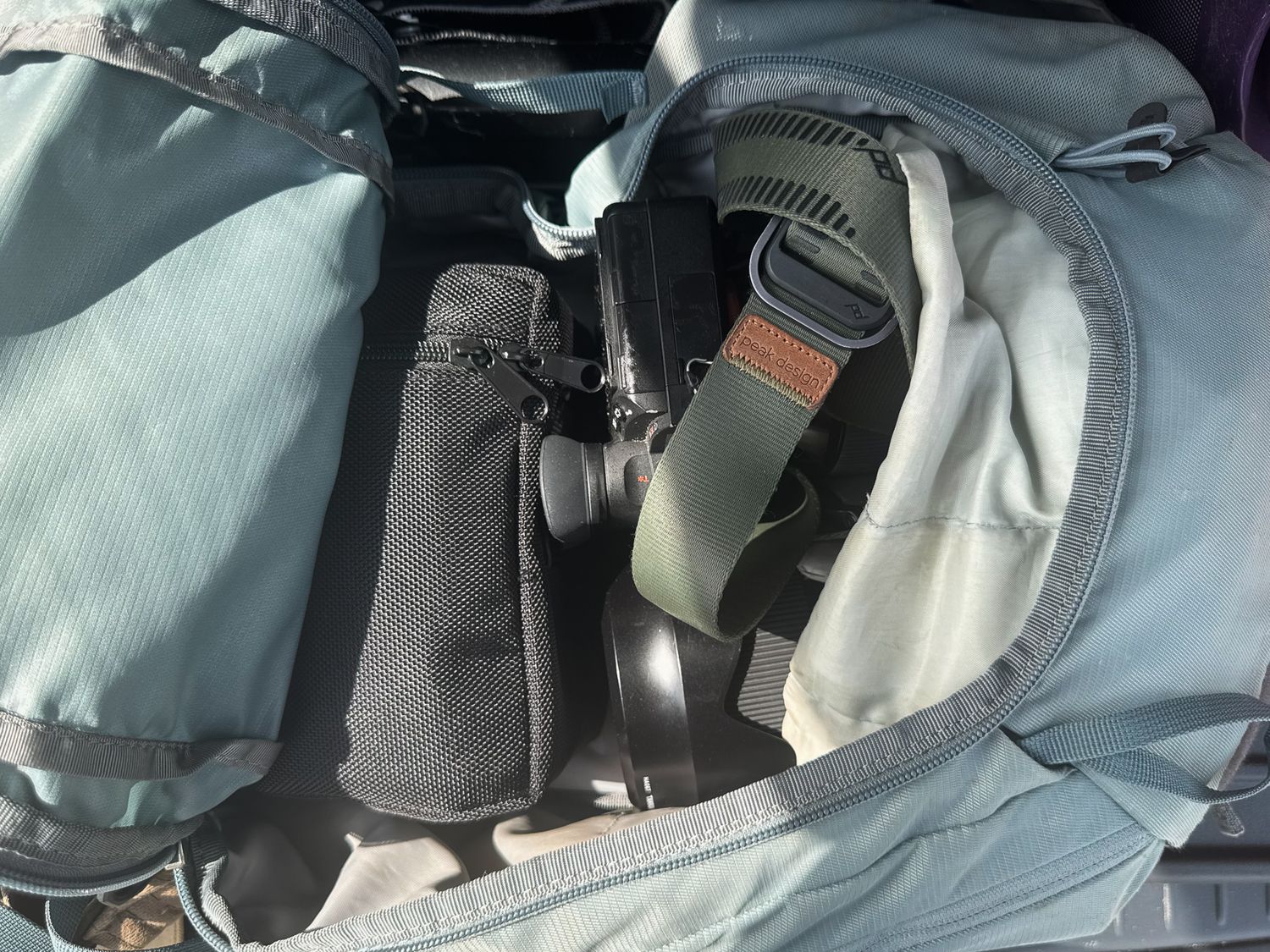
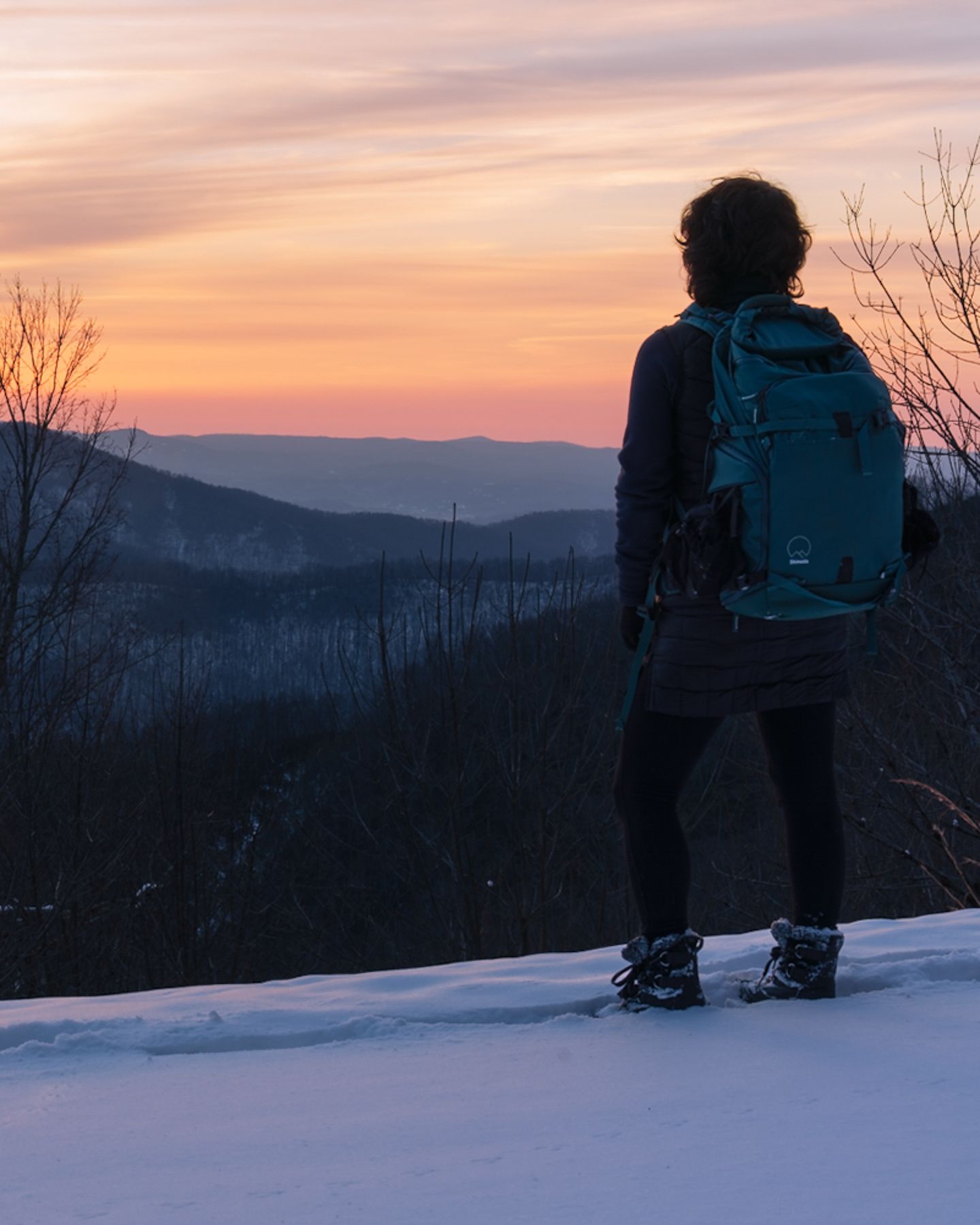
The Shimoda Action 40 x2 is for full-kit situations and travel. It's a photography-specific pack, designed for women, with a dedicated camera compartment, modular inserts, and enough structure to protect everything in transit. Client shoots, airports, even shorter hikes — any day where I need the whole lineup and need to trust it arrives intact.
The Small Stuff That Actually Matters
This section is for everything that doesn't photograph well but repeatedly saves the shoot.
Backup batteries — more than one. Cold weather drains them faster than you'd expect, as I learned the hard way on Roan Mountain. But even in mild conditions, a long outing with heavy use can exhaust a single battery before you're ready to stop shooting. I carry at minimum two backups and keep them somewhere warm when temperatures drop.
Sony wireless remote shutter release. For any long exposure on a tripod, a remote shutter eliminates the camera shake that even a light touch on the shutter button introduces. If you're using a tripod and not using a remote shutter, you're leaving sharpness on the table.
Lens cloths. Always more than one. Condensation, mist, accidental fingerprints — something is always reaching for your glass, especially near water or in humid conditions.
Headlamp. Non-negotiable. Sunrise hikes start in the dark, and the trail back is sometimes in the dark too. I've also used mine to light a foreground element at blue hour when the ambient light wasn't doing the work. Multi-purpose.
The Drone: DJI Mavic 3S
The drone doesn't go on every outing. When it goes, it earns its spot.
The DJI Mavic 3S gives me a perspective I can't get from the ground — altitude, context, the kind of establishing frame that shows a landscape in relation to itself. It's also where my aerial video for client projects comes from. The image quality integrates cleanly with my Sony stills in the edit, which wasn't always the case with earlier drone generations.
One note: drone use is restricted in parts of the Blue Ridge Parkway and in designated wilderness areas. Know the regulations before you fly.
FAQ
Q: What camera gear do landscape photographers typically carry? A: A landscape photography kit typically includes a full-frame mirrorless or DSLR camera body, a selection of wide-angle and zoom lenses, a lightweight travel tripod, and filters — particularly a neutral density filter for long exposures and a circular polarizer for managing reflections. Most working photographers also carry backup batteries, a remote shutter release, and a weather-resistant bag sized to the day's terrain.
Q: What lenses are best for landscape photography? A: A fast standard zoom in the 24-70mm range covers the majority of landscape situations. A wide-angle lens in the 14-24mm range adds dramatic depth and foreground interest. A telephoto zoom (50-400mm or similar) handles compression, distant detail, and wildlife. Beyond that, specialty lenses like a macro depend on your specific subjects. Start with the standard zoom and add from there.
Q: Do I need filters for landscape photography? A: Two filters earn their place in most kits. A neutral density (ND) filter slows your shutter speed for long-exposure effects — motion in water and clouds. A circular polarizing filter (CPL) reduces glare and reflections and deepens color saturation, particularly near water. Neither is required, but both expand what you can capture in-camera without relying on post-processing.
This gear has been through countless WNC mornings and more than a few international trips. It's about to head to Norway for five weeks — including a hut-to-hut trek through the Aurlandsdalen Valley — and I'll be documenting all of it on Instagram in real time.
If you're a destination, hospitality brand, or tourism organization looking for images that do more than show up pretty, let's chat about what we could create together. Just fill out the form below!